

Nicholas Trant had a remarkable military career, most notably in Coimbra, where he was applauded as “The Saviour of the Country” and roses were thrown in his path. Around 25 members and guests gathered at St Andrew’s Church in Lapa on 26 September 2026 to hear this talk by Tim Richardson, based on a book he published about Trant earlier this year. Tim began by thanking Ninna Taylor for sponsoring the venue and encouraging him to give the talk, and the Society for supporting the evening’s lecture as well as contributing towards the cost of publishing the book.
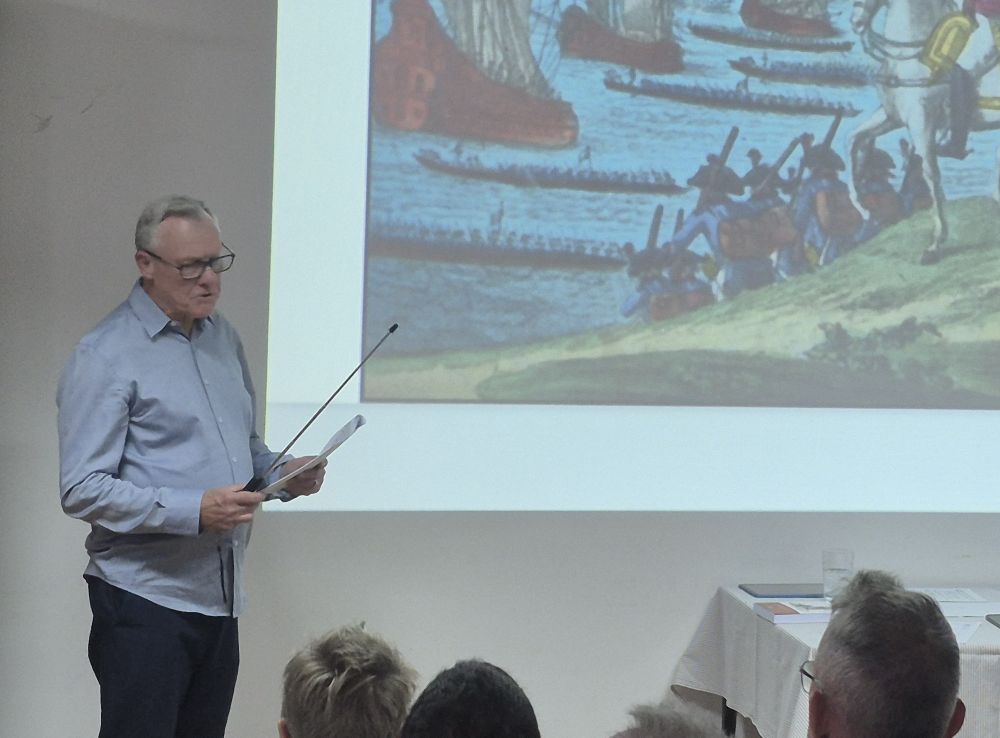
Trant was born into a Catholic family in Cork in 1768. He joined one of King Louis XVI’s Irish Regiments aged 20 and was posted to Oléron on the west coast of France. Four years later, the French Revolutionaries had taken power and Trant’s regiment began to fight the Revolutionaries with the aim of restoring the King to the French throne. Wounded in the leg while in the Low Countries, he was evacuated to London, where he fell in love with Sally Horsington. Financially, he had little choice but to join the British army, which was now accepting Catholics.
After a brief stint in South Africa, Trant was sent to Portugal in 1796 as part of a 6,000-man force requested by the King of Portugal. There was no invasion from Spain, so Trant spent the next two years learning the language and culture of Portugal and travelling around the country. He then accompanied General Charles Stuart to seize Menorca from the French. There, they discovered thousands of prisoners of war from all over Europe. Stuart asked Trant to make a Regiment out of these prisoners. He then fought the French in the Battle of Alexandria in Egypt, having been promoted to Lieutenant General. Peace was subsequently declared at the Treaty of Amiens and Trant returned to England with his Regiment.
At 34, Trant, now a married man and father, had spent his entire adult life fighting. He had had enough. He sold his commission as Lieutenant General (worth as much as half a million euros today) and the family moved to Boulogne. A year later, war was declared again and Napoleon ordered the arrest of any foreign male of military age. Trant and his family were arrested but freed by Napoleon following the intervention of Lady Tweeddale. They had lost everything in France and Trant had no option but to rejoin the British military, starting again at the bottom.
Following the first French invasion of Portugal during the Peninsular War, a significant Portuguese militia had sprung up in Coimbra. Britain needed someone to coordinate their participation in the planned invasion of Portugal by Britain, due to land at Figueira da Foz. Trant, who now had a desk job in the Ministry of Defence, was suddenly summoned to the office of the Minister, Viscount Castlereagh, and ordered to leave immediately for HMS Hibernia, Britain’s flagship, anchored just outside Lisbon harbour. From there he was sent to Coimbra. To give him the necessary status to negotiate with the Coimbra militia, which was led by a general, he was promoted back to Lieutenant Colonel, perhaps the fastest ever promotion in the British army!
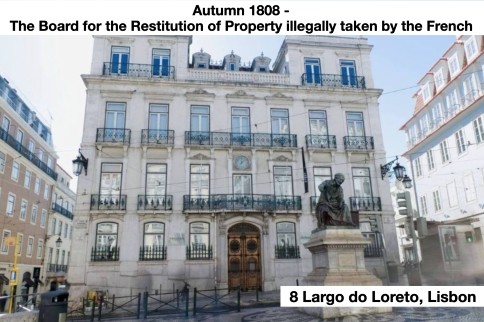
Negotiations in Coimbra did not go smoothly. General Andrade was not keen on taking orders from Wellington, an English lieutenant-general, and remained determined to march to the Tagus to cut off the expected French reinforcements coming from Spain. Trant achieved a compromise. Andrade seconded 1400 infantry and 250 cavalry to Wellington, and Trant was given their command, leading them to victory at the battles of Roliça and Vimeiro. Following the French surrender and the signing of the Convention of Cintra, a commission was set up, known as “The Board for the Restitution of Property illegally taken by the French”, and Trant represented Britain. The Portuguese representative died almost immediately and the French representative never turned up. Trant, working essentially on his own at the board’s HQ (below) and unfinanced, managed to return the equivalent of some thirty million euros worth of items to the rightful Portuguese owners. It would appear that he was never officially thanked for his efforts.
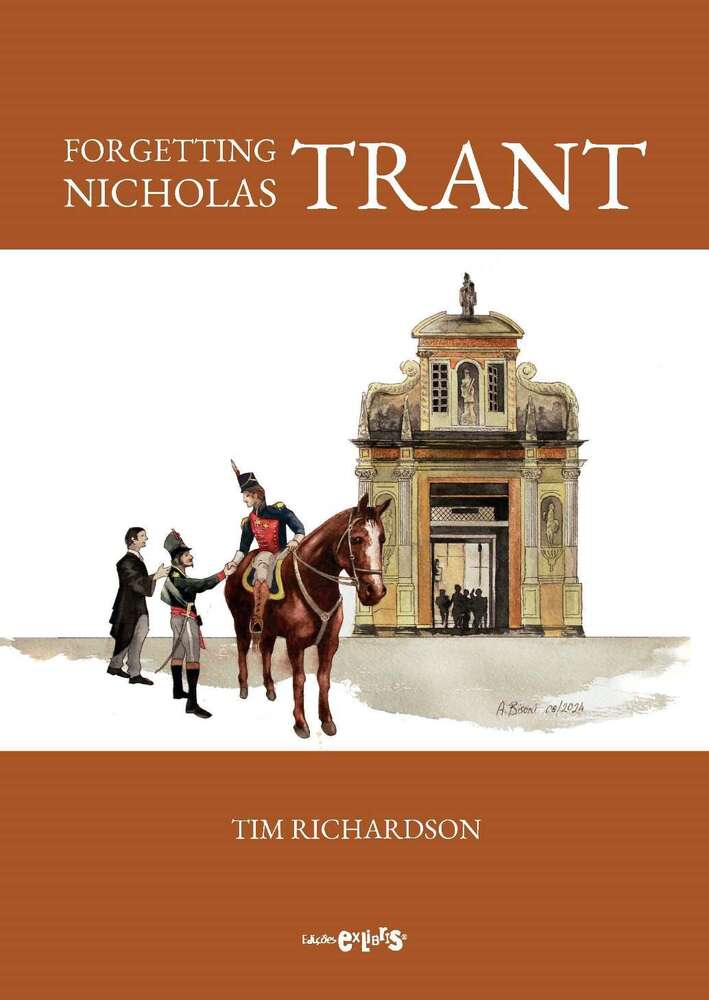
Trant then returned to Horse Guards. However, he was in London for little more than a month when Castlereagh ordered him to leave immediately for Lisbon. The Second French Invasion had begun and General Soult was heading for Porto. Arriving in Lisbon, he was sent to Coimbra by Beresford, then Military Governor of Lisbon. Arriving in Coimbra, with the French already about to take Porto, Trant resolved to raise an army from scratch. At the Porta Ferrea in Coimbra University, he was met by three young men (below) who all spoke English. Pedro was a cavalry officer who happened to be in the vicinity as Beresford had ordered him to scour the country estates for horses (which were in short supply) to build up a new cavalry. Also present, were the Morais de Sarmento brothers studying at the University. He asked if these three young men would agree to be his aides-de-camp and ordered them to find 150 men between them to start a new militia army.

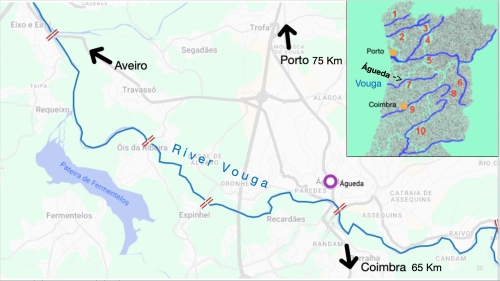
They rounded up 300 men with no difficulty, perhaps because of Trant’s reputation in the city. His new militia army, a mixture of army remnants, civilians, and the Academic Battalion (raised by the University in times of strife) marched to the River Vouga singing and shouting and set up defences on the south bank, with orders to look big and noisy. When the French cavalry arrived at the Vouga they were brought to a shuddering halt. There was an army waiting on the south bank that was not supposed to be there. Confused, the French held back and waited for reinforcements from Spain. These never arrived and, as a result of this remarkable subterfuge, Trant was able to hold the French on the Vouga for six weeks until Wellington arrived from Lisbon.
Trant passed his command to Wellington and together they strode northwards and quickly recaptured Porto as General Soult fled into Spain. Wellington immediately gave chase but not before appointing Trant as Governor of Porto, with orders to restore order in the city. Governor Trant found himself in charge of 10,000 militia as there was every chance that France would return for a Third Invasion. He dedicated much effort to training them into a disciplined and enthusiastic force, just as he had done in Menorca.
Marshal Masséna battled his way through Ciudad Rodrigo and Almeida and took on Wellington at Bussaco. Wellington had the tactical advantage and only withdrew after inflicting heavy casualties on the French. Massena might have assumed that Trant’s militia was also fleeing south, but he would have been wrong. Having attacked Massena’s baggage train en route to Viseu, Trant had had to make a long detour north to avoid being discovered and, while Masséna invaded Coimbra, Trant was reaching Mealhada to the north. Realising the opportunity, he and his militia crept up on Coimbra from the north and managed to take the city almost without casualties. He had captured the city of Coimbra, but Masséna was not far south and could easily turn back. Trant ordered an immediate evacuation, and escorted the estimated 5,000 French wounded, supply staff and others to Porto. This was the only time that Napoleon ever lost a hospital and he lost it to a man who was only there as the result of Lady Tweeddale’s intervention. Masséna continued south until he came across the 150 forts of the Lines of Torres Vedras Line. After hanging around for another five weeks trying to work out what to do, his troops ran out of food and enthusiasm and Masséna retreated north and back to Spain.
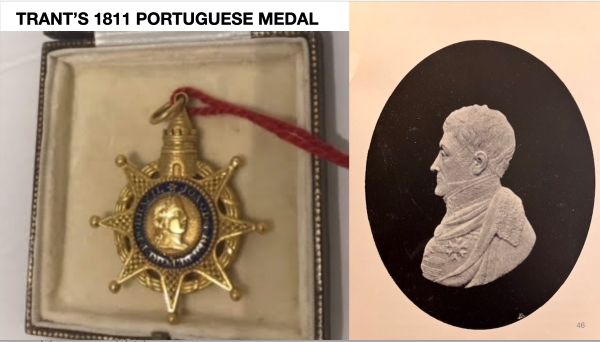
Trant returned to Porto only to confront a different inconvenience. With Portugal no longer considered under threat from Napoleon, Britain’s entitled class descended on Portugal for their vacations, carrying Letters of Introduction and expecting the Governor to lay on the entertainment. Trant did his best in the circumstances. After five years in Porto, now Sir Nicholas Trant as the King of Portugal had recognised his contribution during the French Invasions (see above), he decided to retire. His horse had recently tripped and thrown him on to the pavement head first and he had had a difficult recovery. He returned to England. However, half pensions proved insufficient and he had great difficulty surviving financially while bringing up two children on his own. He ended up being largely forgotten, apart from by his descendants who to this day name their children Trant or Nicholas in his honour. He was certainly forgotten by Portugal. As yet, there is no statue or street bearing his name.

Tim Richardson’s self-published historical novel, Forgetting Nicholas Trant, can be obtained directly from the author for the price of €20 plus packaging and postage.
SUBSCRIBE TO OUR NEWSLETTER
